+91-XXXXXXXXXX info@kssaketcollege.ac.in
Logo
K.S. Saket P.G. College
Affiliated to: Dr. Ram Manohar Lohia Awadh University, Ayodhya
Ayodhya (U.P.), India
Faculties Faculty of Science Botany Dr. Awadhesh Kumar Shukla
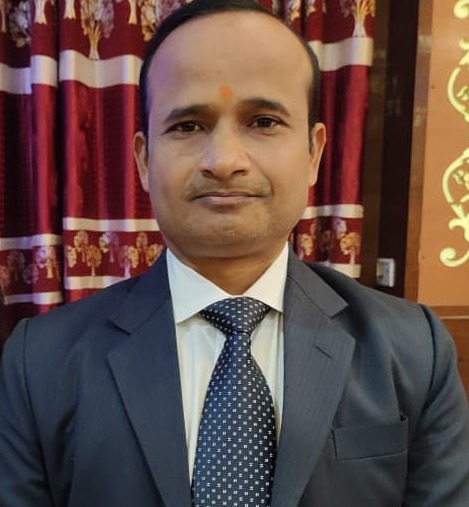
Dr. Awadhesh Kumar Shukla

Dr. Awadhesh Kumar Shukla

Assistant Professor
MSc, PhD, NET-JRF
Faculty of Science Botany awadhesh@kssaketpgcollege.ac.in 9415441172
Quick Info
Designation
Assistant Professor
Qualification
MSc, PhD, NET-JRF
Faculty
Faculty of Science
Department
Botany
Tip: Use “Print” for page printing, or “Download Profile (PDF)” to save/print.

About


About

Dr. Awadhesh Kumar Shukla is currently serving as an Assistant Professor of Botany at K.S. Saket P.G. College, Ayodhya, Uttar Pradesh, India. He earned his doctoral degree in Botany from Banaras Hindu University, Varanasi, where his research focused on the biodegradation of trichloroethylene using bacterial communities. Following his Ph.D., Dr. Shukla was awarded the CSIR Research Associateship (New Delhi) and worked as a postdoctoral researcher in the Department of Botany at Banaras Hindu University from 2012 to 2015. He was subsequently honored with the prestigious Dr. D.S. Kothari Postdoctoral Fellowship (higher fellowship category) by the University Grants Commission (UGC).

Dr. Shukla has published more than 20 research and review articles in reputed international journals, along with over six book chapters. His work has gained recognition at the international level for its scientific contribution and practical relevance. Throughout his academic career, he has received several prestigious fellowships and awards, including the Young Scientist Award, CSIR Research Associateship, UGC Dr. D.S. Kothari Postdoctoral Fellowship, UGC-NET JRF, CSIR-NET JRF, and CSIR-SRF.

He is also a lifetime member of Academic Societies such as the Association of Microbiologists of India (AMI),  Biotech Research Society, India (BRSI) and ICAR- (BSMS) Biotic Stress Management Society, India

Research


Research

With over a decade of research experience, Dr. Shukla has actively contributed to the fields of plant–microbe interactions and the utilization of microbial communities for the remediation of xenobiotics. His research primarily focuses on rhizosphere-associated microbial communities and their potential applications in environmental cleanup and sustainable agriculture.

Publications


Publications

Research and Review Articles 

  1. Shukla AK., Pranjali Vishwakarma, S.N. Upadhyay, Anil K Tripathi, H.C. Prasanna and Suresh K Dubey (2009). Biodegradation of trichlroethylene (TCE) by methanotrophic community. Bioresource Technology, 100, 2469-2474. [IF: 9.0] 
  2. Shukla AK, Pranjali Vishwakarma , R. S. Singh , S.N. Upadhyay , Suresh K. Dubey (2010a).  Biofiltration of trichloroethylene using diazotrophic bacterial community. Bioresource Technology. 101, 2126-2133. [IF: 9.0]
  3. Shukla AK, R. S. Singh , S.N. Upadhyay , Suresh K. Dubey (2010b). Kinetics of  biofiltration     of trichloroethylene by methanotrophs in presence of methanol.  Bioresource Technology. 101, 8119- 8126. [IF: 9.0]
  4. Shukla AK, R. S. Singh , S.N. Upadhyay , Suresh K. Dubey (2011). Substrate inhibition during bio-filtration of TCE using diazotrophic bacterial community. Bioresource Technology . 102, 3561-3563. [IF: 9.0]
  5. Yadav M, Srivastava N, Shukla AK,  R.S.Singh, S.N Upadhyay, Suresh K Dubey (2015) Efficacy of Aspergillus sp. for degradation of chlorpyrifos in batch and continuous aerated packed bed bioreactors. Applied Biochemistry and Biotechnology. 175, 16-24. [IF: 3.3]
  6. Srivastava N, Shukla AK, Singh RS, Upadhyay SN, Dubey SK (2015) Characterization of bacterial isolates from rubber dump site and their use for biodegradation of isoprene in batch and continuous bioreactors. Bioresource Technology. 188, 84-91. [IF: 9.0].
  7. Shukla AK, S.N. Upadhyay, Suresh. K. Dubey (2014). Current trends in trichloroethylene biodegradation:a review: Critical Reviews in Biotechnology. 34, 101-114. [IF: 7.7]. 
  8. Yadav M*, Shukla AK*N Srivastava*, S.N Upadhyay, Suresh K Dubey (2016). Utilization of microbial community potential for removal of chlorpyrifos: a review. Critical Reviews in Biotechnology36, 727-42 (* Equal contribution). [IF: 7.7].
  9. Geed S Kureel MK, Shukla A K, Singh RS and Rai BN (2016). Biodegradation of malathion and evaluation of kinetic parameters using three bacterial species. Resource Efficient Technologies. 2, S3-S11.
  10. Kureel MK, Geed S, Giri BS, Shukla A K, Rai BN and Singh RS (2016). Removal of aqueous benzene in the immobilized batch and continuous packed bed bioreactor by isolated Bacillus sp.M1. Resource Efficient Technologies 2, Pages S87-S95. 
  11. Shukla AK (2018). Phytoremediation of xenobiotics using arbuscular mycorrhiza from contaminated soil. International Journal of Tropical Agriculture. 36, 901-906. [NAAS rating: 3.49]. 
  12. Shukla AK (2018). Plant growth promoting rhizobacteria (PGPR): An alternative source of biofertilizer for sustainable agriculture. International Journal of Tropical Agriculture. 36, 729-736. [NAAS rating: 3.49]. 
  13. Vaishnav A, Shukla AK, Sharma A, Kumar R and Choudhary DK (2019). Endophytic bacteria in plant salt stress tolerance: current and future prospects. Journal of Plant Growth Regulation, 38, 650-668 [IF: 4.4]. 
  14. Shukla AK and Singh AK (2020). Exploitation of potential extremophiles for bioremediation of xenobiotics compounds: a biotechnological approach. Current Genomics, Doi: 10.2174/1389202921999200422122253. [IF: 1.4].
  15. U Anand, Anukool Vaishnav, Sushil K. Sharma, Jagajjit Sahu , Sarfaraz Ahmad , Kumari Sunita, S. Suresh, Abhijit Dey, Elza Bontempi, Amit Kishore Singh, Jarosław Proćków, AK Shukla (2022). Current advances and research prospects for agricultural and industrial uses of microbial strains available in world collections. Science of The Total Environment , 842, 156641. [IF: 8.0]. 
  16. Anand U, Pal T, Yadav N, Singh VK, Tripathi V, Choudhary KK, Shukla AK, Sunita K, Kumar A, Bontempi E, Ma Y. Current scenario and future prospects of endophytic microbes: promising candidates for abiotic and biotic stress management for agricultural and environmental sustainability. Microbial Ecology. 2023 Oct;86(3):1455-86. [IF: 4.0].
  17. Tripathi M, Singh S, Pathak S, Kasaudhan J, Mishra A, Bala S, Garg D, Singh R, Singh P, Singh PK, Shukla AK. Recent strategies for the remediation of textile dyes from wastewater: a systematic review. Toxics.2023 Nov 19;11(11):940. [IF: 4.1].
  18. Maurya S, Tripathi M, Tiwari KK, Shukla AK. Analyses of water quality using different physico-chemical parameters: A study of Saryu river. The Scientific Temper. 2023 Aug 2;14(03):674-9.
  19. Maurya S, Tripathi M, Tiwari KK, Shukla AK. Isolation and molecular characterization of microbial isolates from Saryu river water. The Scientific Temper. 2023 Dec 27;14(04):1142-7.
  20. Tripathi, M.; Pathak, S.; Singh, R.; Singh, P.; Singh, P.K.; Shukla, A.K.; Maurya, S.; Kaur, S.; Thakur, B. A Comprehensive Review of Lab-Scale Studies on Removing Hexavalent Chromium from Aqueous Solutions by Using Unmodified and Modified Waste Biomass as Adsorbents. Toxics 2024, 12, 657. https://doi.org/10.3390/ toxics12090657. [IF: 4.1].
  21. M Tripathi, S Pathak, R Singh, P Singh, PK Singh, N Prasad, S Maurya and Shukla AK 2024. Adsorptive remediation of hexavalent chromium using agro-waste rice husk: Optimization of process parameters and functional groups characterization using FTIR analysis. The Scientific Temper 15 (04), 2958-2963.
  22. Abhinav P Yadav, Shubham Gudadhe, Sarika Kumari, Sadanand Maurya, Manikant Tripathi, Shukla AK 2024. Assessment of heavy metal contamination in Trifolium alexandrium and Spinaciaoleracea using ICP-MS: A comparative analysis across different districts in eastern Uttar Pradesh. The Scientific Temper 15 (03), 2440-2446.
  23. Manikant Tripathi, Shivpujan Shukla, Ranjan Singh, Sangram Singh, Pankaj Singh, Pradeep Kumar Singh, Awadhesh Kumar Shukla, Sadanand Maurya, Sukriti Pathak, Vinod Kumar Chaudhary, Ajay Kumar Shukla and R. Manimekalai. Physicochemical investigations of textile wastewater and process parameter optimization for bio-decolorization of congo red dye by Pseudomonas aeruginosa MT-2 strain. J Pure Appl Microbiol. Published online 16 November 2024. doi: 10.22207/JPAM.18.4.29. [IF: 0.6]
  24. A.K Singh, V.K., Shukla, A.K. & Singh, 2024. Endophytic Bacillus species as multifaceted toolbox for agriculture, environment, and medicine. Environment Development and Suistainability, https://doi.org/10.1007/s10668-024-05706. [IF: 4.2].
  25. Abhinav Prakash Yadav, Shubham Gudadhe, Sarika Kumari, Ratna Shukla, Manikant Tripathi Awadhesh Kumar Shukla. 2025. Impact of heavy metals assessments on the physiological aspects of spinach plant (Spinacia oleracea L.). The Scientific Temper 16, 3592-3600. 
  26. P Kumar, AK Sharma, Pal K, Shukla AK, 2025. Effect of environmental factors on the communal roosting behavior of House crow (Corvus splendens). Journal of Environmental Biology, 46, 792-801. [IF:0.7]. 
  27. Sadanand Maurya.  Awadhesh Kumar Shukla. Bhaskar Reddy , Amit Kishore Singh. Vipin Kumar Singh . Manikant Tripathi 2026. Metagenomic insights into microbial community, antibiotic resistance genes and virulence factor in Saryu river water, India. Environmental Science and Pollution Research (Revision).

Books/Book Chapters :

  1. Dubey SK, Vishwakarma P, Shukla AK, Maya K, Singh AK, Singh A. (2011). Metabolic engineering: a multifarious promising tool of post genomic era. In: Roy BK, Chaudhary BR, Sinha RP.(Eds.). Plant Genome, Diversity, Conservation and Manipulation. Narosa Publishing House, New Delhi, pp 59-68. ISBN No: 978-81-8487-113-5. 
  2. Shukla AK(2018). Factors affecting the diversity of plant growth promoting rhizobacteria in agricultural fields. Contemporary climate issues and challenges:  A multidisciplinary approach. Eds.(Yadav M, Rani V and Kumar A).Anamika Publishers and Distributers (P) LTD. New Delhi. ISBN No. 978-81-7975-959-2.
  3.  Shukla AK (2019). Ecology and diversity of plant growth promoting rhizobacteria in agricultural landscape. pp 1-11. Elsevier. PGPR Amelioration in Sustainable Agriculture. Eds. (Singh AK, Kumar A and Singh PK). DOI: https://doi.org/10.1016/B978-0-12-815879-1.00001-X. ISBN: 978-0-12-815879-1 (print) ISBN: 978-0-12-816019-0 (online). 
  4. Singh VK, Shukla AK and Singh AK (2019). Impact of climate change on plant_microbe interactions under agro-ecosystems. pp 153-179. Elsevier, Climate Change and Agricultural Ecosystems Current Challenges and Adaptation. Eds.(Chaudhary KK, Kumar A and Singh AK). DOI: https://doi.org/10.1016/B978-0-12-816483-9.00007-4, ISBN: 978-0-12-816483-9. 
  5. Shukla AK, Singh AK and Sharma A (2019). Mycorrhizal assisted phytoremediation of xenobiotics from contaminated soil. Pp 53-59, Springer Nature Singapore Pte Ltd. Mycorrhizosphere and Pedogenesis, Eds. (A. Varma, D. K. Choudhary). https://doi.org/10.1007/978-981-13-6480-8_3. ISBN 9789811364808 (online), 9789811364792 (print).
  6. Shukla AK (2019). Emerging infectious diseases caused by fungi in animals and their prevention. pp 1-15. Springer Nature Switzerland AG, Eds. (Gupta A and Singh NP), Recent Developments in Fungal Diseases of Laboratory Animals. https://doi.org/10.1007/978-3-030-18586-2. Print ISBN 978-3-030-18585-5, Online ISBN 978-3-030-18586-2.
  7. A Sharma, A Srivastava, AK Shukla, K Srivastava, AK Srivastava, Saxena AK (2020). Entomopathogenic Fungi: A Potential Source for Biological Control of Insect Pests. Phytobiomes: Current Insights and Future Vistas, Springer, Singapor, 225-250. DOI: 10.1007/978-981-15-3151-4-9.
  8. AK Shukla, YK Singh, VK Pandey (2020). Phytoremediation of Pollutants from Soil. In: Singh P., Singh S.K., Prasad S.M. (eds), Plant Responses to Soil Pollution, Springer, Singapor, 155-161. https://doi.org/10.1007/978-981-15-4964-9_9.
  9. Bacterial Endophytes for Sustainable Agriculture and Environmental Management (2022). Editors: AK Singh, V Tripathi, AK Shukla, P Kumar. Springer Singapore.
  10. AK Shukla, V K Singh, and S Maurya (2022). Climate Change: A Key Factor for Regulating Microbial Interaction with Plants. A. Vaishnav et al. (eds.), Plant Stress Mitigators, https://doi.org/10.1007/978-981-16-7759-5_2.

Teaching


Teaching:

B.Sc.

  • Microbiology and Plant Pathology, and assigned practicals
  • Land Plant Architecture and assigned practicals
  • Flowering Plants Identification and Aesthetic characteristics, and assigned practicals
  • Molecular Biology and Bioinformatics, and assigned practicals
  • Cytogenetics Plant Breeding and Nanotechnology, and assigned practicals

M.Sc.

  • Microbiology, and assigned practicals
  • Plant Development and Reproduction, and assigned practicals
  • Cytogenetics and Biostatistics, and assigned practicals
  • Plant Biotechnology and Bioinformatics, and assigned practicals
  • Supervision of undergraduate and postgraduate students for projects and dissertation works

Awards


Fellowships/Awards: 

  •  Recipient of National Scholarship.
  •  Qualified GATE in 2005 and 2006 (Twice).
  •  JRF (NET) UGC Sept 2006-August 2007.
  •  JRF (NET) CSIR Sept 2007- August 2008.
  •  SRF CSIR Sept 2008- August 2011.
  •  CSIR-Research Associate (2012-15)
  •  UGC-Dr. D S Kothari Post-doctoral Fellowship in the year 2017.
  •  Young Scientist & Outstanding Scientist Award 2018 (Society of Tropical Agriculture, New Delhi)

Contact


Affiliation
Faculty of Science
Botany